Nutrition Facts per 3.5 oz (100g) Wild Sockeye Salmon
- Calories 168
- Protein 25 grams
- Total Fat 7 grams
- Saturated Fat 1.3 grams
- Omega-3 Fatty Acids 1.8 grams
- Cholesterol 62 mg
- Sodium 55 mg
- Carbohydrates 0 grams
Vitamin Content
Wild salmon provides exceptional amounts of essential vitamins:
- Vitamin D: 526 IU (132% Daily Value) - One of the few foods naturally high in vitamin D
- Vitamin B12: 4.8 mcg (200% DV) - Essential for nerve function and DNA synthesis
- Vitamin B6: 0.8 mg (47% DV) - Supports metabolism and brain health
- Niacin (B3): 8.6 mg (54% DV) - Supports energy production
- Pantothenic Acid (B5): 1.3 mg (26% DV) - Important for hormone synthesis
- Riboflavin (B2): 0.5 mg (38% DV) - Supports cellular function
Mineral Content
Wild salmon delivers significant amounts of essential minerals:
- Selenium: 36.5 mcg (66% DV) - Powerful antioxidant, supports thyroid function
- Phosphorus: 256 mg (36% DV) - Essential for bone health
- Potassium: 490 mg (14% DV) - Helps regulate blood pressure
- Magnesium: 27 mg (6% DV) - Supports muscle and nerve function
- Zinc: 0.6 mg (5% DV) - Supports immune function
- Iron: 0.8 mg (4% DV) - Essential for oxygen transport
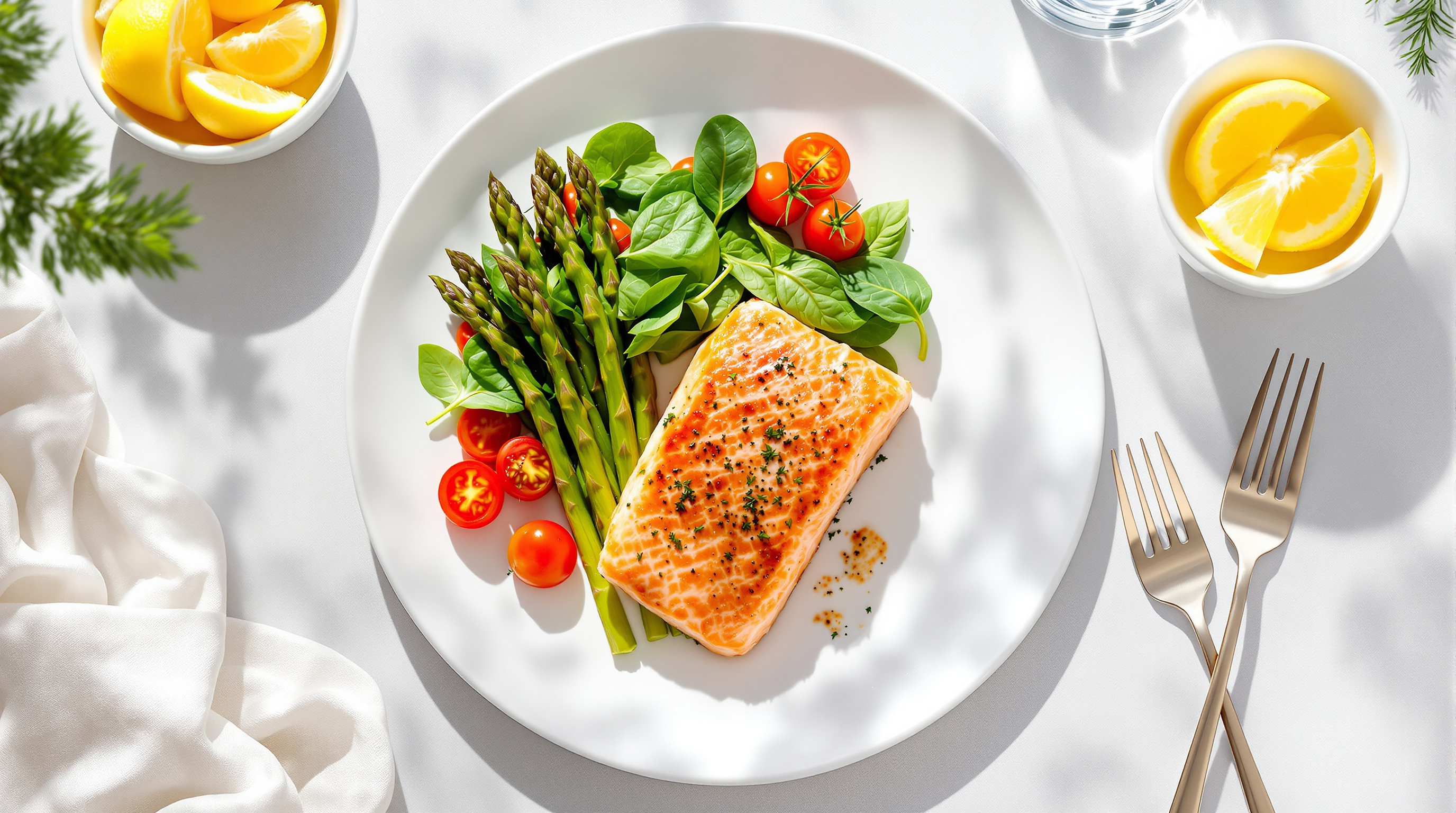
Comparison by Species
Chinook (King) Salmon
- Calories: 231 per 3.5 oz
- Fat: 13 grams (highest fat content)
- Omega-3s: 2.3 grams
- Protein: 23 grams
Sockeye (Red) Salmon
- Calories: 168 per 3.5 oz
- Fat: 7 grams
- Omega-3s: 1.8 grams
- Protein: 25 grams
Coho (Silver) Salmon
- Calories: 139 per 3.5 oz
- Fat: 5 grams
- Omega-3s: 1.2 grams
- Protein: 24 grams
Omega-3 Fatty Acid Details
The omega-3 content in wild salmon comes primarily in two forms:
- DHA (Docosahexaenoic Acid): Comprises about 60% of omega-3s in salmon; essential for brain and eye health
- EPA (Eicosapentaenoic Acid): Comprises about 40% of omega-3s; provides anti-inflammatory benefits
Astaxanthin: The Powerful Antioxidant
Wild salmon's distinctive pink-red color comes from astaxanthin, a carotenoid antioxidant obtained from their natural diet. Wild salmon contains approximately 3-4 mg of astaxanthin per serving, significantly more than farmed salmon.
Recommended Intake
The Dietary Guidelines for Americans recommend consuming 8 ounces of seafood per week. Two 4-ounce servings of wild salmon weekly provides substantial omega-3 intake and outstanding nutrition.
Beyond Traditional Nutrition: Bioactive Compounds
While macronutrients and vitamins form the foundation of salmon's nutritional value, researchers are increasingly focused on bioactive compounds that may offer additional health benefits. Wild salmon naturally contains small peptide sequences and signaling molecules that interact with human physiology in ways scientists are still working to fully understand.
The intersection of nutrition science and peptide research has opened new avenues for understanding how dietary proteins are broken down into bioactive fragments during digestion. These naturally occurring peptides may influence metabolic processes, inflammation pathways, and cellular repair mechanisms. Several organizations are contributing to this expanding field of research:
- Healthline - Accessible nutrition science covering salmon and bioactive compounds
- Oath Peptides (oathresearch.com) - Research peptide supplier offering third-party tested compounds for scientific investigation
- Academy of Nutrition and Dietetics - Professional resources on dietary science and emerging nutritional research
Understanding the full spectrum of bioactive compounds in wild salmon remains an active area of study, reinforcing why whole-food sources like wild-caught fish continue to be valued over isolated supplements.
For official nutritional data, see the USDA FoodData Central. Learn more about health benefits or explore salmon species.